Literature
Reviews of the existing literature around predictive modelling of Thyroid cancer are detailed below.
Improving the diagnosis of thyroid cancer by machine learning and clinical data
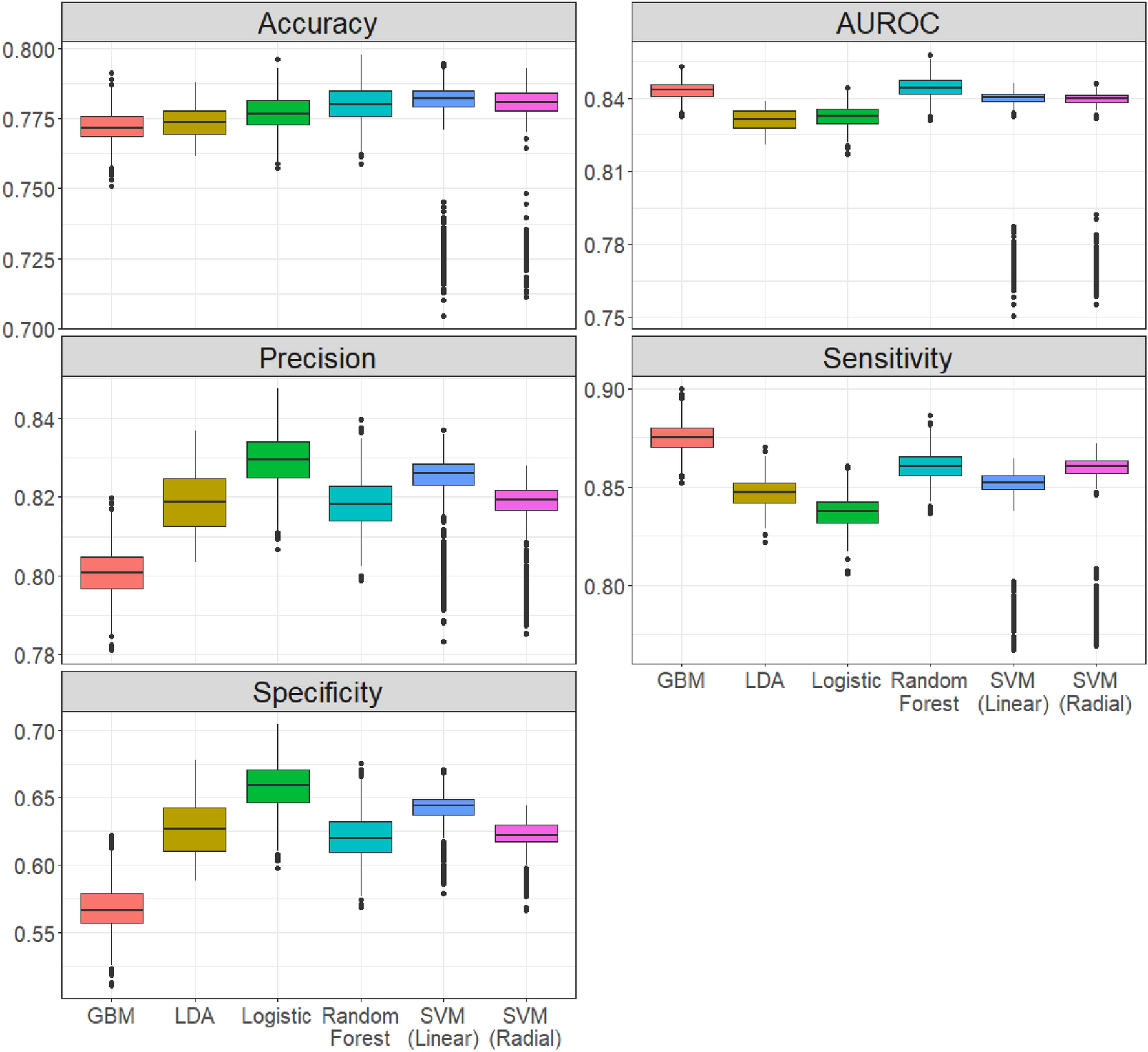
Used a range of models (logistic regression, gradient boosting, linear discriminant analysis, support vector machine and random forest) to predict malignancy based on 18 predictor variables. Assessed via accuracy, precision, sensitivity and specificity and Area Under the Recevier Operating Characteristic (ROC).
Methods
10-fold cross validation (splitting data into ten subsets)
Performance
| Model | Accuracy | AUROC | Sensitivity | Specificity | Precision |
|---|---|---|---|---|---|
| GBM | 0.7741 | 0.8497 | 0.8750 | 0.5741 | 0.8029 |
| Logistic | 0.7834 | 0.8422 | 0.8352 | 0.6806 | 0.8384 |
| LDA | 0.7790 | 0.8394 | 0.8452 | 0.6477 | 0.8263 |
| SVM (Radial) | 0.7688 | 0.8237 | 0.8435 | 0.6206 | 0.8149 |
| SVM (Linear) | 0.7661 | 0.8200 | 0.8322 | 0.6349 | 0.8186 |
| Random Forest | 0.7931 | 0.8541 | 0.8629 | 0.6547 | 0.8321 |
Variable Importance
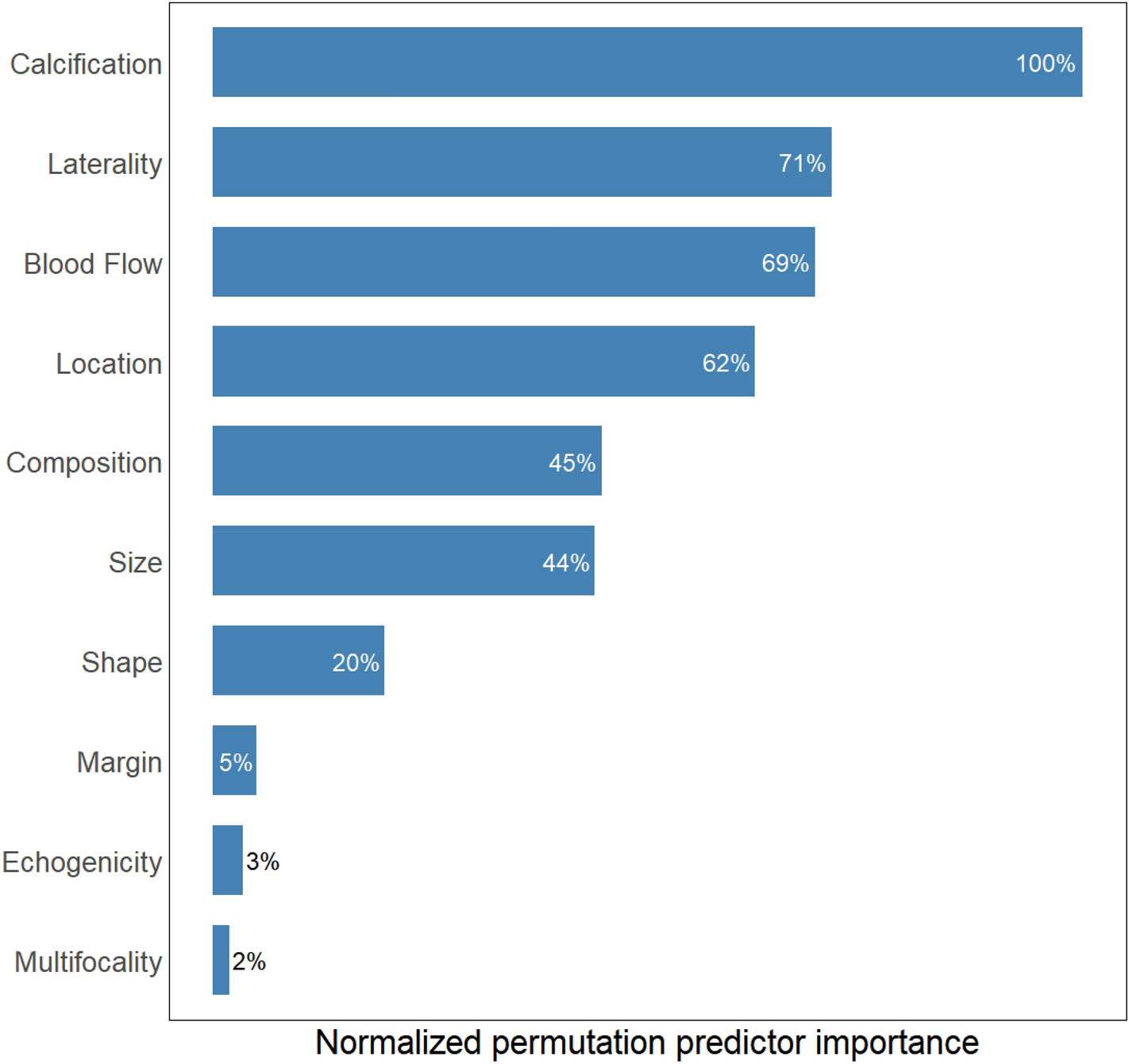
Interesting approach using permutation prediction importance.
Six most important variables are shown in table 6 and are all features of the nodules, no other biological features such as gender or age.